
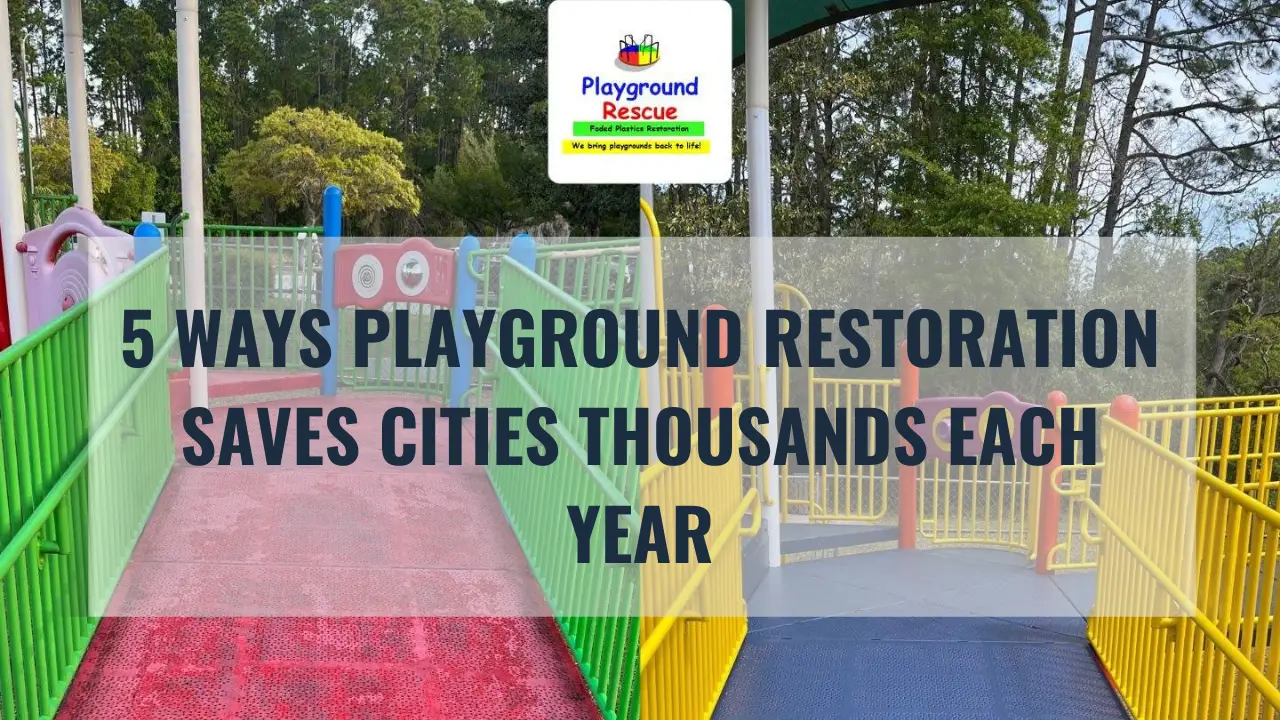
The Budget Pressure Facing City Parks Departments
City parks and recreation departments face constant pressure to do more with less. Aging infrastructure, rising labor costs, and public expectations make maintaining community playgrounds increasingly difficult.
One of the biggest budget challenges municipalities face is faded playground equipment. While the equipment may still be structurally safe, the faded appearance creates complaints, political pressure, and perceived neglect.
Fortunately, playground restoration has emerged as a proven way for cities to save thousands of dollars each year, without sacrificing safety or appearance.
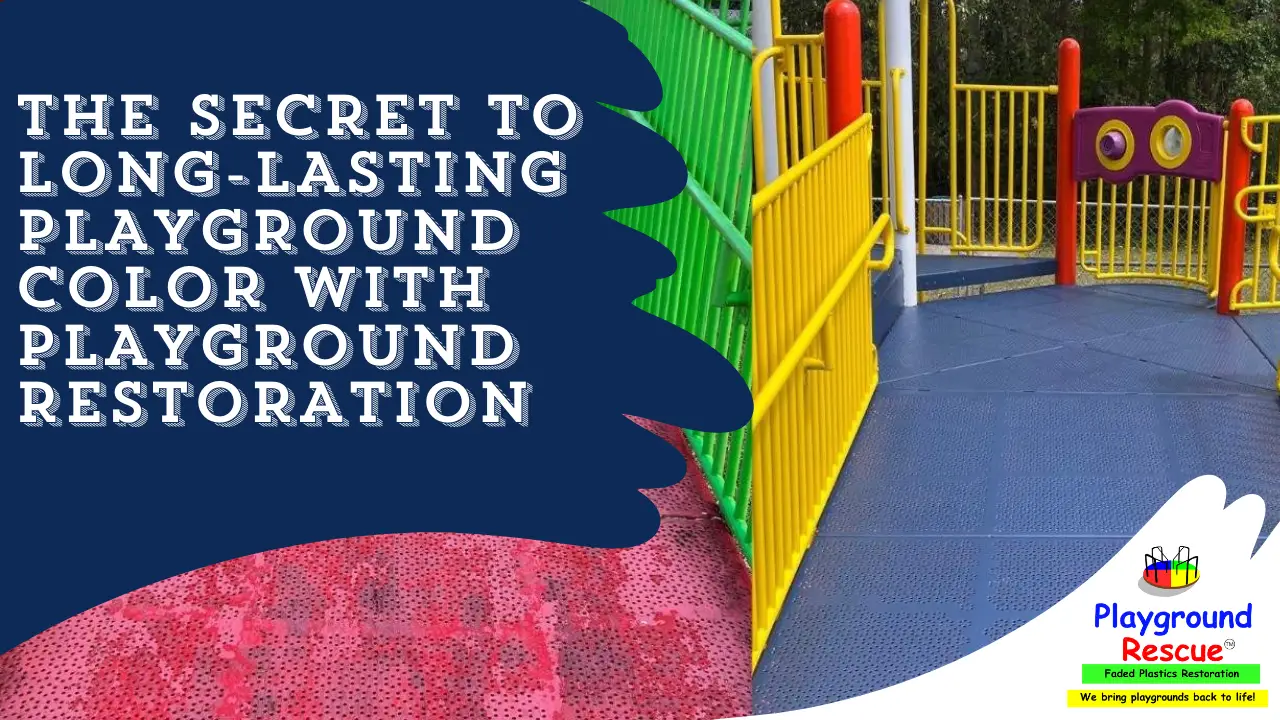
This article explains five key ways playground restoration saves cities money while extending the life of public playground assets.
1. Avoiding Costly Playground Replacement
The most obvious way playground restoration saves cities money is by avoiding replacement altogether.
Replacement costs typically include:
- Demolition and removal
- Disposal and landfill fees
- New equipment purchase
- Installation and labor
- Playground closures
Municipal playground replacement projects often exceed $75,000–$150,000 per site.
Playground restoration:
- Costs up to 70–80% less
- Requires no equipment removal
- Can be completed on-site
For cities managing dozens or even hundreds of playgrounds, the savings add up quickly.
2. Extending the Useful Life of Existing Playground Assets
Most playground equipment is designed to last 20–30 years structurally. However, many cities replace equipment far earlier simply because it looks worn.
Playground restoration allows cities to:
- Preserve structurally sound equipment
- Restore vibrant color and appearance
- Delay replacement by many years
By restoring instead of replacing, cities turn playground equipment into long-term assets rather than short-term expenses.
3. Reducing Ongoing Maintenance and Repainting Costs
Cities often attempt to address fading with repeated repainting or temporary fixes.
The problem with repainting:
- Paint doesn’t bond to playground plastics
- Peeling and flaking occur quickly
- Labor and material costs repeat annually
Professional playground restoration eliminates this cycle by using bonded coatings designed for low surface energy plastics.
Result:
- Fewer maintenance interventions
- Lower labor costs
- Reduced material expenses
Over time, this translates into significant operational savings.
4. Minimizing Playground Downtime and Disruption
Playground closures cost cities more than money — they impact community satisfaction.
Replacement projects often require:
- Weeks or months of closure
- Construction disruptions
- Negative public feedback
Playground restoration is typically completed in days, not weeks, with minimal disruption.
This means:
- Faster reopening
- Happier residents
- Fewer complaints to city officials
Shorter downtime also reduces indirect costs associated with managing closures and public communication.
5. Improving Public Perception Without Capital Spending
Public perception matters, especially for city leaders.
Faded playgrounds can create the impression of:
- Neglect
- Poor budget management
- Declining infrastructure
Playground restoration delivers a dramatic visual transformation that:
- Makes parks look new again
- Boosts community pride
- Demonstrates responsible use of taxpayer funds
All without triggering expensive capital projects or long procurement cycles.
Why Playground Restoration Works for Municipal Budgets
Municipal budgets often separate capital expenses from operational expenses.
Playground replacement typically requires:
- Capital funding
- Long approval processes
- Council or board votes
Playground restoration often qualifies as:
- A maintenance expense
- A faster procurement process
- A lower approval threshold
This flexibility allows parks departments to act quickly while staying within budget constraints.
How Long Does Playground Restoration Last in City Parks?
Durability is critical for public spaces.
Professional playground restoration:
- Includes a 3-year no-fade warranty
- Typically lasts 5+ years outdoors
- Can be repeated as needed
This allows cities to plan long-term maintenance strategies rather than reactive replacements.
Environmental Savings: Keeping Plastic Out of Landfills
Replacing playground equipment generates significant waste.
Playground restoration:
- Keeps usable plastic out of landfills
- Reduces manufacturing demand
- Supports sustainability initiatives
For cities focused on environmental responsibility, restoration aligns with green goals and public expectations.
Real-World Impact: Scaling Savings Across Multiple Playgrounds
Cities rarely manage just one playground.
When restoration is applied across:
- Neighborhood parks
- Community centers
- School-adjacent playgrounds
The cumulative savings can reach hundreds of thousands, or even millions, of dollars over time.
Why Cities Trust Playground Rescue
Playground Rescue has over 30 years of experience restoring playground equipment nationwide.
Municipal advantages include:
- Proven Cross-Link Bonding Technology
- No disassembly required
- On-site professional application
- Consistent results across multiple sites
- Nationwide service capability
Trusted since 1991, Playground Rescue helps cities maximize playground budgets without sacrificing quality.
Conclusion: A Smarter Way for Cities to Maintain Playgrounds
Replacing playgrounds every time they fade is no longer necessary, or fiscally responsible.
With professional playground restoration, cities can:
- Save thousands each year
- Extend equipment lifespan
- Improve public spaces
- Demonstrate smart stewardship of public funds
Is your city spending too much replacing faded playgrounds?
Contact Playground Rescue today for a free municipal evaluation and see how restoration can stretch your parks budget further.