
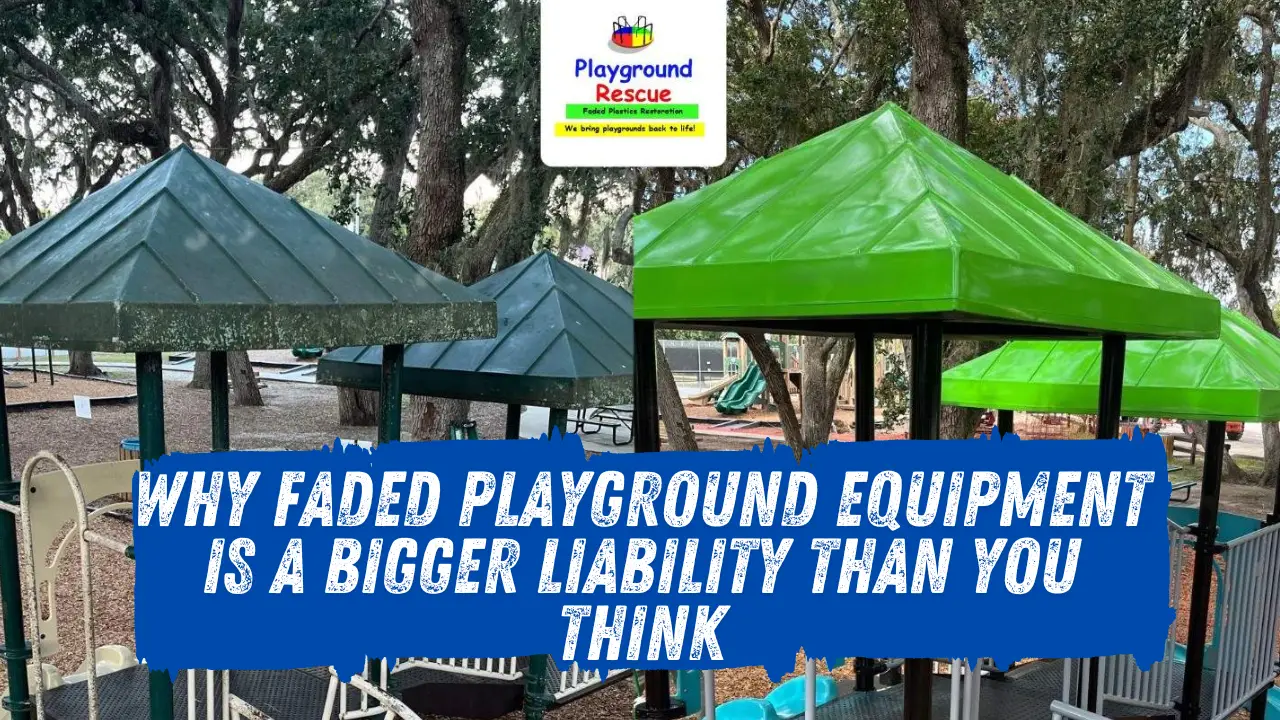
Why Faded Playground Equipment Is More Than a Cosmetic Issue
Many organizations believe faded playground equipment is simply an appearance problem. If the structure is still standing and children can play safely, why worry about color?
The reality is far more serious.
Faded playground equipment can increase liability exposure, trigger safety concerns, and invite scrutiny from parents, inspectors, and insurance providers, even when the equipment is structurally sound.
In this article, we’ll explain why faded playground equipment is a bigger liability than most organizations realize, and how playground restoration plays a critical role in risk reduction.
How Faded Playground Equipment Impacts Perceived Safety
Perception matters, especially when children are involved.
Parents often associate faded, worn-looking playground equipment with:
- Poor maintenance
- Outdated safety standards
- Potential hazards
Even when equipment is technically safe, appearance influences trust.
Why perception creates liability:
If an incident occurs on a visibly neglected playground, perception can:
- Strengthen negligence claims
- Increase legal scrutiny
- Raise insurance concerns
Restored playgrounds send a clear message of active care and maintenance.
Faded Color Reduces Visibility and Increases Risk
Playground color isn’t just aesthetic, it’s functional.
Bright colors:
- Improve visibility of steps, edges, and transitions
- Help children identify play elements
- Aid supervision by adults
When playground equipment fades:
- Contrast is reduced
- Visual cues disappear
- Risk of slips or missteps increases
Playground restoration restores high-visibility color, improving both safety and supervision.
Insurance and Inspection Red Flags
Insurance providers and safety inspectors look for signs of proper maintenance.
Faded playground equipment may be interpreted as:
- Deferred maintenance
- Asset neglect
- Increased risk exposure
This can result in:
- Higher insurance premiums
- Required corrective actions
- Pressure to replace equipment
Proactive playground restoration demonstrates ongoing maintenance and can help support insurance compliance.
Why “It’s Just Cosmetic” Doesn’t Hold Up in Liability Claims
In liability cases, documentation matters.
If a playground incident occurs, investigators may examine:
- Maintenance records
- Visual condition of equipment
- Past complaints or warnings
Faded equipment can be framed as evidence of neglect, even if structurally safe.
Playground restoration provides:
- Documented maintenance actions
- Visual proof of care
- A defensible position in the event of claims
Common Liability Scenarios Involving Faded Playground Equipment
Scenario 1: Parent Complaint Escalation
Repeated complaints about faded equipment that go unaddressed may establish a pattern of inaction.
Scenario 2: Post-Incident Scrutiny
After an injury, faded equipment may draw attention during investigations.
Scenario 3: Insurance Review
Insurers may question maintenance practices when visual deterioration is present.
Playground restoration addresses these issues proactively.
Why Painting Playground Equipment Can Increase Liability
Some organizations attempt to solve fading by painting equipment.
This can actually increase liability due to:
- Peeling or flaking surfaces
- Slippery coatings
- Improper adhesion
Paint failure can introduce new hazards rather than eliminate risk.
Professional playground restoration uses bonded coatings designed specifically for playground plastics.
How Playground Restoration Reduces Liability Risk
Playground restoration improves safety and defensibility in multiple ways:
Key liability-reduction benefits:
- Restores high-visibility color
- Eliminates chalky, oxidized surfaces
- Improves traction and surface consistency
- Demonstrates proactive maintenance
Restoration vs. Replacement: Liability Perspective
Replacement is not always the safest or smartest immediate solution.
Replacement projects:
- Take longer to complete
- Require extended closures
- Can delay corrective action
Playground restoration:
- Is completed quickly
- Minimizes exposure window
- Addresses visible issues immediately
This makes restoration an effective risk mitigation strategy, not just a cost-saving one.
How Long Does Liability Protection From Restoration Last?
Professional playground restoration includes:
- UV protection
- Durable bonded coatings
- A 3-year no-fade warranty
Restored playgrounds typically maintain safe, visible color for 5+ years, reducing long-term liability exposure.
Who Faces the Highest Liability Risk From Faded Equipment
Organizations most exposed include:
- Schools and school districts
- Municipal parks departments
- HOAs and apartment communities
- Daycares and churches
Any organization responsible for children’s play areas benefits from proactive restoration.
Why Organizations Trust Playground Rescue
Playground Rescue has over 30 years of experience restoring faded playground equipment nationwide.
What makes Playground Rescue a trusted choice:
- Proprietary Cross-Link Bonding Technology
- No paint or heat methods
- On-site application with no disassembly
- Proven durability and warranties
- Nationwide service
Trusted since 1991, Playground Rescue helps organizations reduce liability while restoring playground appearance.
Conclusion: Faded Playground Equipment Is a Risk You Can Control
Ignoring faded playground equipment increases risk — visually, legally, and financially.
With professional playground restoration, organizations can:
- Improve safety perception
- Reduce liability exposure
- Demonstrate proactive maintenance
- Avoid unnecessary replacement
Concerned about liability risks from faded playground equipment?
Contact Playground Rescue today for a free evaluation and learn how restoration protects your playground and your organization.