
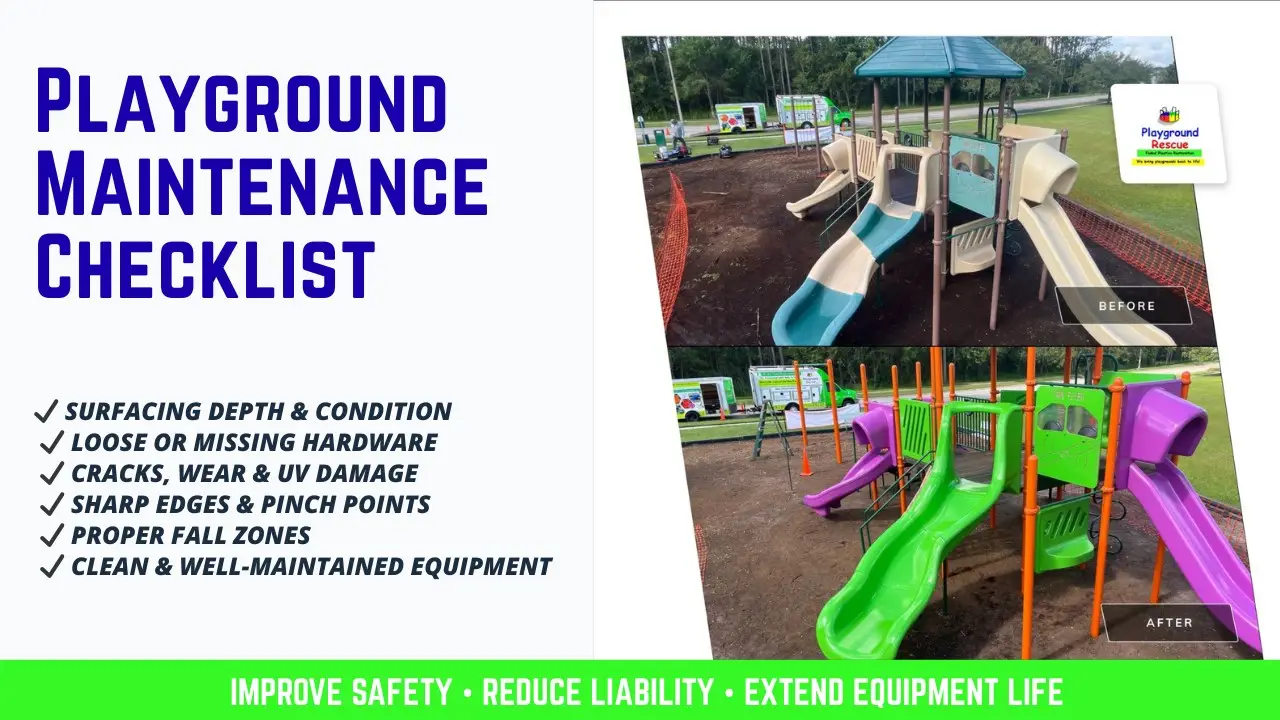
Playgrounds are meant to be places of joy, exploration, and physical development—but behind the fun is a serious responsibility. For schools, parks, HOAs, and property managers, maintaining a safe playground isn’t just about appearances. It’s about protecting children, reducing liability, and staying compliant with national safety standards.
Many decision-makers assume that if playground equipment looks “okay,” it’s probably safe. Unfortunately, that’s one of the most common (and costly) misconceptions. Hidden hazards, worn surfacing, loose hardware, and faded plastics can quietly turn a playground into a liability risk.
That’s where professional playground safety inspections come in.
In this guide, we’ll walk you through exactly what happens during a professional playground safety inspection, what inspectors look for, why it matters, and how working with an experienced company like Playground Rescue helps keep your playground safe, compliant, and looking its best.
Why Playground Safety Inspections Are Essential
Playground safety inspections serve three critical purposes:
- Protect children from preventable injuries
- Reduce liability and insurance exposure
- Ensure compliance with national safety standards
According to the U.S. Consumer Product Safety Commission (CPSC), over 200,000 children are treated annually for playground-related injuries. Many of these injuries are caused by issues that inspections are designed to catch—such as improper surfacing depth, protruding hardware, or damaged components.
For organizations responsible for playgrounds, regular inspections are not optional best practices—they’re a core part of responsible facility management.
Who Should Schedule Professional Playground Inspections?
Professional inspections are especially important for:
- School administrators and districts
- Municipal parks and recreation departments
- HOA boards and property managers
- Daycare centers and churches
- Apartment complexes and community parks
If your playground serves the public or children outside a private residence, inspections are a key part of risk management.
What Standards Do Playground Inspections Follow?
Professional playground safety inspections are typically based on:
- CPSC Public Playground Safety Handbook
- ASTM F1487 (Standard Consumer Safety Performance Specification for Playground Equipment)
- ASTM F1292 (Impact Attenuation of Surfacing)
- ADA accessibility guidelines (where applicable)
Experienced inspectors don’t just glance at equipment—they evaluate it against these detailed, nationally recognized standards.
Step-by-Step: What Happens During a Professional Playground Safety Inspection?
1. Initial Site Overview and Playground Assessment
The inspection begins with a full walkthrough of the playground site. Inspectors evaluate:
- Playground layout and equipment placement
- Fall zones and use zones
- Equipment age and overall condition
- Environmental factors (sun exposure, drainage, wear patterns)
This initial overview helps identify high-risk areas and determines where deeper inspection is needed.
2. Surfacing Inspection (One of the Most Critical Steps)
Falls are the leading cause of playground injuries, which makes surfacing one of the most important inspection components.
Inspectors evaluate:
- Type of surfacing (engineered wood fiber, rubber, turf, etc.)
- Depth of loose-fill materials
- Compression and displacement
- Drainage and moisture issues
- Compliance with fall height requirements
Even a small loss of surfacing depth can turn a compliant playground into a dangerous one. Professional inspections measure and document these details accurately.
3. Equipment Structural Integrity Check
Next, inspectors examine the physical condition of the playground equipment, including:
- Cracks or fractures in plastic components
- Rust or corrosion on metal structures
- Weak or unstable connections
- Loose bolts, missing hardware, or exposed fasteners
Faded plastic isn’t just a cosmetic issue—it can signal UV degradation, which weakens material over time. This is where professional insight matters most.
4. Entrapment, Entanglement, and Protrusion Hazards
Some of the most dangerous playground hazards aren’t obvious to the untrained eye.
Inspectors look for:
- Head, neck, or limb entrapment openings
- Protruding bolts or hardware
- Sharp edges or pinch points
- Entanglement hazards (such as ropes or drawstrings)
These hazards are closely regulated under ASTM standards and are a common source of injury and lawsuits when overlooked.
5. Fall Height and Use Zone Evaluation
Every piece of playground equipment has a designated maximum fall height, which determines:
- Required surfacing depth
- Minimum spacing between structures
- Clear use zones around equipment
Professional inspectors measure fall heights and confirm that surrounding areas meet safety requirements. This is especially important for climbing structures, slides, and overhead equipment.
6. Wear-and-Tear and Maintenance Red Flags
Inspections don’t just focus on immediate dangers—they also identify early warning signs of future problems, including:
- Chalking, fading, or oxidation of plastic surfaces
- Loose or worn components
- Repetitive impact wear in high-traffic areas
Catching these issues early allows for maintenance or restoration, rather than costly replacement later.
7. ADA Accessibility Review (When Applicable)
For public playgrounds, inspectors may also evaluate:
- Accessible routes and entry points
- Transfer platforms and ramps
- Surfacing accessibility
Accessibility compliance isn’t just about regulations—it ensures inclusive play opportunities for all children.
What Happens After the Inspection?
A professional playground safety inspection doesn’t end with a checklist. You should receive:
- A detailed written report
- Documentation of identified hazards
- Photos of problem areas
- Prioritized recommendations (immediate vs. long-term)
- Guidance on repairs, maintenance, or restoration
This report becomes an essential tool for budgeting, planning, and demonstrating due diligence to insurers and governing bodies.
Why Inspections Often Lead to Restoration (Not Replacement)
Many playgrounds fail inspections not because they are unsafe structurally, but because of:
- Faded, UV-damaged plastics
- Surface oxidation
- Worn finishes
- Cosmetic deterioration that affects durability
This is where Playground Rescue stands apart.
Instead of defaulting to expensive replacement, Playground Rescue helps clients:
- Restore faded plastic using Cross-Link Bonding Technology
- Extend equipment life by years
- Improve safety and appearance
- Save 70–80% compared to replacement
Restoration is often the smartest next step after an inspection.
How Often Should Playgrounds Be Inspected?
While frequency varies, general best practices include:
- Daily/weekly visual checks by on-site staff
- Monthly operational inspections
- Annual professional safety inspections
High-use playgrounds or those exposed to intense sun and weather may require more frequent evaluations.
Why Choose Playground Rescue for Playground Safety Inspections?
With over 30 years of experience, Playground Rescue understands playgrounds from the inside out. Our inspections don’t exist in a vacuum—they’re backed by real-world solutions.
We offer:
- Expert inspections aligned with national standards
- Clear, actionable reporting
- Honest guidance (restore vs. repair vs. replace)
- On-site restoration with no disassembly required
- A 3-year no-fade warranty on restored plastics
We don’t just identify problems—we help you solve them.
Final Thoughts: Inspections Protect More Than Equipment
A professional playground safety inspection protects:
- Children who use the playground
- Organizations responsible for maintenance
- Budgets from unnecessary replacement costs
- Communities from preventable risk
If your playground hasn’t been professionally inspected—or if it’s been years since the last one—it’s time to take a closer look.
Ready to Schedule a Playground Safety Inspection?
If you want confidence that your playground is safe, compliant, and ready for years of use, Playground Rescue is here to help.
Contact Playground Rescue today for a professional playground safety inspection and evaluation.