
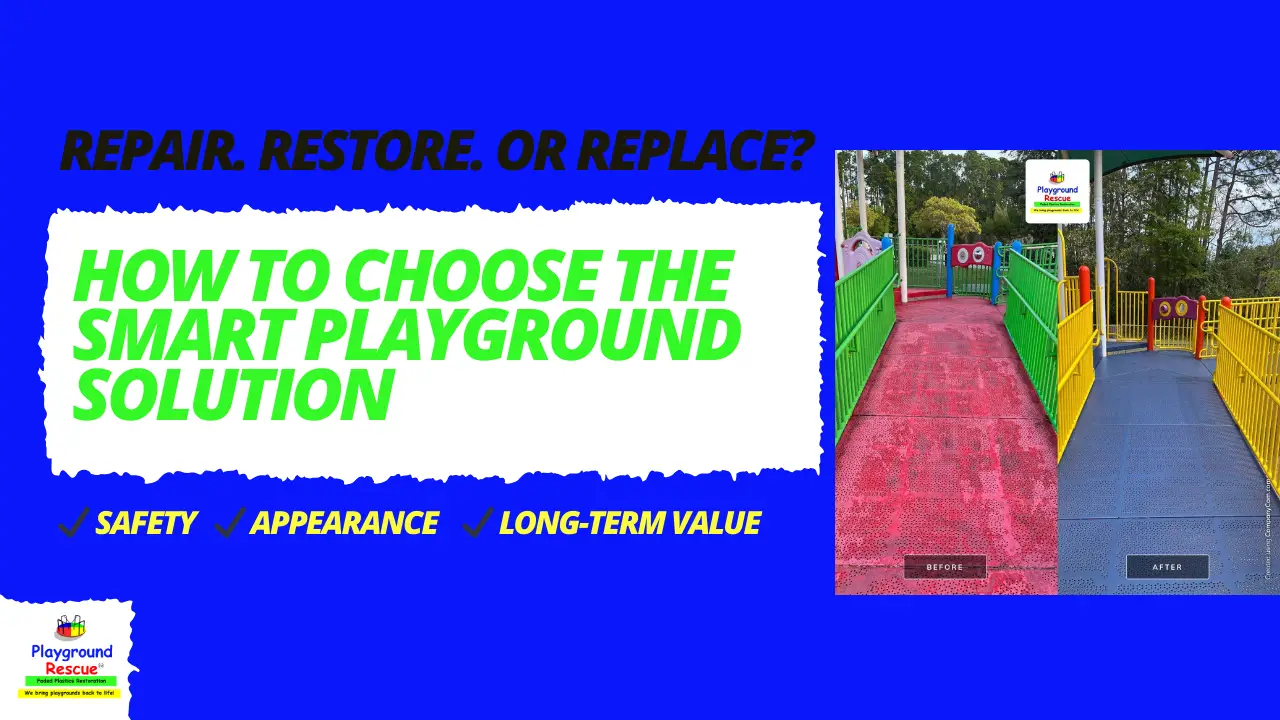
When a playground starts to look worn, faded, or unsafe, decision-makers are often faced with a tough question: Should we repair it, restore it, or replace it altogether?
For schools, parks, HOAs, and municipalities, making the wrong choice can lead to wasted budget, repeat maintenance issues, or even increased liability. The good news is that full replacement is rarely the first, or best, option.
In this guide, we’ll break down the difference between playground repair and playground restoration, explain when each option makes sense, and help you choose the solution that protects safety, appearance, and long-term value.
Why This Decision Matters More Than You Think
Playground equipment is a major community asset. It impacts:
- Child safety
- Liability and insurance exposure
- Community appearance and pride
- Capital and operating budgets
Too often, aging playgrounds are replaced simply because they look bad, when in reality, they’re still structurally sound and could be renewed at a fraction of the cost.
Understanding the difference between repair and restoration helps you avoid overspending while still delivering safe, compliant, great-looking play spaces.
What Is Playground Repair?
Playground repair focuses on fixing specific damaged or unsafe components. It’s a targeted solution meant to address functional or structural issues rather than overall appearance.
Common playground repairs include:
- Replacing broken or missing hardware
- Fixing damaged steps, rails, or barriers
- Repairing surfacing in high-impact areas
- Replacing worn swing chains or seats
- Tightening loose connections
Repairs are often reactive—responding to an identified hazard or inspection finding.
When repair makes sense:
- Damage is isolated to specific parts
- Equipment is otherwise in good condition
- Safety issues need immediate correction
- Appearance is acceptable overall
Repairs are essential, but they don’t address aging, fading, or widespread cosmetic deterioration.
What Is Playground Restoration?
Playground restoration addresses system-wide wear and visual decline while preserving the original structure. It focuses on renewing surfaces, extending lifespan, and restoring a “like-new” appearance.
Restoration typically includes:
- Refinishing faded plastic components
- Restoring color and UV protection
- Treating surface oxidation or chalking
- Refinishing metal components
- Improving overall appearance and durability
At Playground Rescue, restoration uses Cross-Link Bonding Technology to rejuvenate plastics and coatings without disassembly, creating a durable molecular bond rather than a surface-level paint layer.
Repair vs. Restoration: Key Differences
| Category | Playground Repair | Playground Restoration |
| Purpose | Fix specific issues | Renew overall condition |
| Scope | Localized | System-wide |
| Appearance | Minimal improvement | Dramatic visual upgrade |
| Longevity | Short- to mid-term | Long-term extension |
| Cost | Lower per fix | 70–80% less than replacement |
| Ideal Use | Safety corrections | Aging but sound equipment |
Understanding this difference prevents one of the most common mistakes: using repairs to solve restoration problems.
Common Scenarios (And the Right Solution)
Scenario 1: The Playground Is Safe but Looks Terrible
- Faded plastic
- Chalky surfaces
- Dull colors
✅ Best Solution: Restoration
Repairs won’t fix fading or UV damage. Restoration restores appearance and UV resistance without replacement.
Scenario 2: One Section Is Broken or Unsafe
- Cracked panel
- Loose ladder
- Damaged swing
✅ Best Solution: Repair
Targeted repair resolves the issue quickly and cost-effectively.
Scenario 3: Multiple Issues Across the Playground
- Fading everywhere
- Minor wear in several areas
- No structural failures
✅ Best Solution: Restoration + Minor Repairs
This is the most common and cost-effective combination.
Scenario 4: Structural Damage or Metal Fatigue
- Deep rust
- Cracked welds
- Structural instability
❌ Neither repair nor restoration is enough
Replacement of affected components—or full replacement—may be necessary.
Why Restoration Is Often the Smarter First Step
Many decision-makers assume restoration is “just cosmetic.” In reality, it’s a preventive maintenance strategy.
Benefits of professional playground restoration:
- Extends equipment life by years
- Restores visibility of wear and damage
- Improves safety perception for parents and inspectors
- Reduces long-term maintenance costs
- Avoids capital replacement budgets
For HOAs and municipalities, restoration also helps boards and councils see visible results without approving major expenditures.
Cost Comparison: Repair vs. Restoration vs. Replacement
While costs vary by site, the difference is dramatic:
- Repairs: Low upfront, ongoing costs over time
- Restoration: Moderate upfront, long-term savings
- Replacement: Highest cost, longest downtime
In many cases, Playground Rescue helps clients save 70–80% compared to full replacement while achieving a “new playground” appearance.
If you’re weighing options, explore how playground restoration compares to replacement costs.
Safety and Compliance Considerations
Both repairs and restoration play a role in maintaining compliance with:
- ASTM playground safety standards
- CPSC public playground guidelines
- ADA accessibility considerations
Neglected appearance can mask hazards. Restoration improves visual clarity, making inspections more accurate and issues easier to spot.
How Inspections Guide the Right Decision
Professional playground safety inspections often determine whether repair or restoration is needed.
Inspectors evaluate:
- Structural integrity
- Surfacing and fall zones
- Wear patterns and UV damage
- Hardware and connections
Based on findings, a trusted provider can recommend:
- Repair only
- Restoration only
- A combined approach
Playground Rescue’s inspections are solution-focused—not replacement-driven.
Why “Just Repainting” Isn’t Restoration
One common mistake is attempting DIY repainting instead of restoration.
Problems with repainting:
- Poor adhesion to existing coatings
- No UV protection
- Peeling within 6–12 months
- Increased maintenance burden
Professional restoration uses bonding technology, not surface paint, to ensure durability and safety.
Learn more about our plastic refinishing process.
When Replacement Really Is the Right Call
Restoration isn’t a cure-all. Replacement may be necessary when:
- Structural integrity is compromised
- Metal corrosion is severe
- Equipment no longer meets basic safety design standards
- Repair costs exceed long-term value
The key is making that decision based on facts, not appearance alone.
Why Playground Rescue Recommends the Right Solution (Not the Most Expensive)
With over 30 years of experience, Playground Rescue focuses on extending asset life—not selling unnecessary replacements.
Clients trust us because we provide:
- Honest assessments
- Clear repair vs. restoration guidance
- On-site service with no disassembly
- A 3-year no-fade warranty on restored plastics
Our goal is to help you make the smartest investment, not the biggest one.
Final Thoughts: Repair, Restore, or Replace—Choose with Confidence
Choosing between playground repair and restoration doesn’t have to be confusing.
- Repair fixes specific safety issues
- Restoration renews aging equipment
- Replacement is a last resort
Understanding the difference protects your budget, reduces liability, and keeps your playground safe and welcoming for years to come.
Ready to Find the Right Solution for Your Playground?
If you’re unsure whether your playground needs repair, restoration, or replacement, Playground Rescue can help.
👉 Contact Playground Rescue today for a free on-site assessment and expert recommendations.